Triumphal Arch
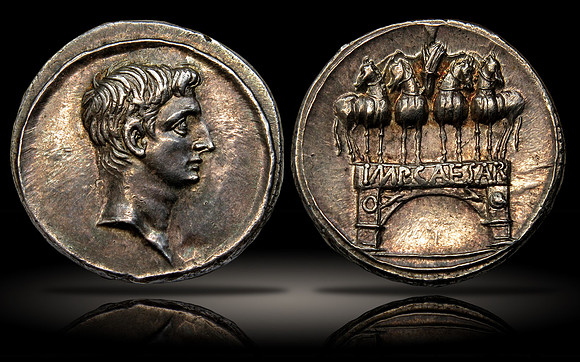
The Actian Arch, also known as the Arcus Octaviani, was a single-span arch erected in the Roman Forum to commemorate Octavian's victory over Antony and Cleopatra at the Battle of Actium in 31 BC. Decreed by the Senate, this modest structure featured a single arcade topped with a depiction of Octavian in a triumphal quadriga. The arch’s precise location and fate remain uncertain, but it was an important symbol of Octavian's triumph, as evidenced by its depiction on coins from the era.
Approximately a decade after its construction, the original single-span Actian Arch was replaced by the Arcus Augusti, a more elaborate triple-span arch. This new structure, completed in 19 BC, celebrated not only the earlier victory at Actium but also Augustus’s recovery of the military standards lost by Antony and Crassus. While numismatic evidence confirms the existence of the original Actian Arch, archaeological findings have primarily uncovered remnants of the later triple-span arch.
The Actian Arch holds significant historical and artistic value, exemplified by its depiction on a starkly beautiful denarius from the imperatorial era. This coin omits all legends except for the inscribed architrave of the triumphal arch, highlighting its importance as a commemorative monument. The transformation from the single-span Actian Arch to the grander triple-span Arcus Augusti reflects the evolving symbolism of Augustus' achievements in consolidating power and securing Rome’s dominance.
Octavian as Triumvir. AR denarius, Rome? 30-29 BC, (3,72 g). Bare head of Octavian right / Single span triumphal arch (Actian arch) surmounted by a large statue of Octavian in triumphal quadriga; IMP CAESAR on architrave
Ex. Triton XI 8/1-2008 nr.654; Ex Superior Stamp & Coin, December 8, 1995; lot 873; Ex. Numismatica Aretusa S.A. Asta 2, 14 May 1994 lot 303; Ex Naville June 12, 1922, lot 106 Monnaies Romaines provenant des collections de M. Paul Vautier et de feu le Prof. Maxime Collignon d l'Institut de France