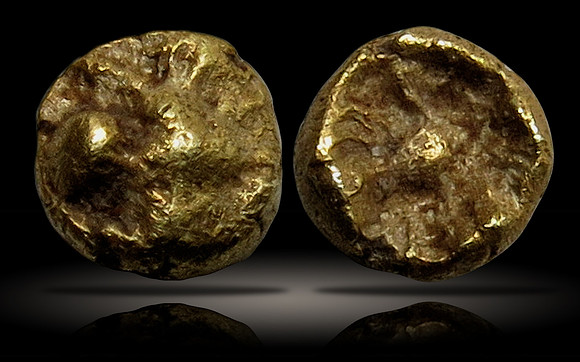
The Smallest Electrum
Because of the scarcity of electrum, the intrinsic value of the earliest coins was too high for use in everyday transactions. Therefore, they were likely primarily used for moving large sums of money in mercantile transactions, government expenses, donatives, or for payment for substantial services. It is also speculated that merchants would allow trusted customers to keep a tab, paying it with a single coin once the bill was significant enough.
This coin represents only the third known example of the smallest electrum denomination, a 1/192nd stater. Some estimates place the ancient value of a trite (1/3rd stater) at around one month’s salary, which makes the present coin worth about a half day’s pay, still a very substantial sum.
It is thought that the scarcity of this and other small electrum coinage is due more to the slim chance of survival of such miniscule pieces rather than being minted in small quantities. Weighing a fraction of a gram, this coin can hardly be perceived when held and can be easily blown away by the slightest of breezes or easily lost in the smallest hole in a pocket.
IONIA, Uncertain. Circa 625-600 BC. EL 1/192 Stater (0.07 g, 3mm). Milesian standard. Geometric type. Indistinct design / Incuse square punch. Cf. SNG Kayhan 691 = Rosen 356 = Vismara, Arcaica 122; otherwise unpublished. Good VF. Extremely rare electrum denomination, apparently the third known.