The Opening Ceremonies of the Colosseum
Titus’ short reign was fraught with disasters. Vesuvius erupted in 79 AD, destroying the cities of Pompeii and Herculaneum. A disease spread across Rome in the same year, and a fire broke out shortly after which raged for three days and nights.
Seeing the need to reinvigorate a shattered population, Titus decided that it was necessary to expedite the opening of the Colosseum and to allow the people to partake in an incredible celebration.
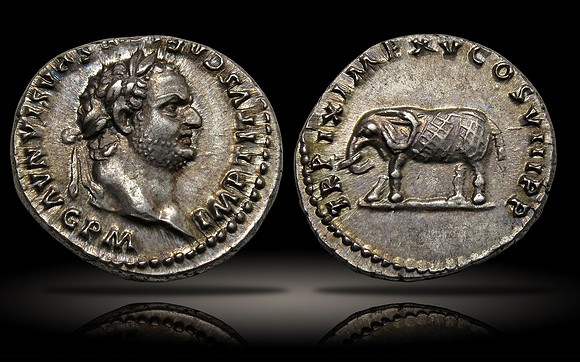
Part of the celebration involved the minting of new coins like this one, a denarius depicting an elephant. Primarily originating in Africa, elephants were exotic and rare. During the inauguration of the Colosseum, Titus imported thousands of animals for exhibition, including elephants. Many of these animals were killed in the famous gladiator battles during the first games.
Romans prominently featured the elephant as a symbol on their coinage due to its impressive attributes. Elephants were frequently used in war and offered a major advantage over cavalry and infantry. The elephant’s size, strength, and thick, defensive hide made it a symbol of power, and, because of their long lives, they represented longevity and prosperity.
On this coin, the presence of an elephant also alludes to the desire for the success of the Flavian dynasty. Having just exited a substantial Civil War, it was hoped that the Flavians would bring a sustained period of peace to the empire.
Titus. AD 79-81. AR Denarius (18mm, 3.48 g, 7h). Rome mint. Struck AD 80. IMP TITVS CAES [V]ESPASIAN AVG P M, laureate head right / TR P IX IMP XV COS VIII P P, elephant, wearing armor, walking left. RIC II 22a; RSC 303; BMCRE 43; BN 37-40. Superb EF, attractive toning. Bold strike on both sides.