Ancient Engraving Techniques
Because of the inherent value of coins, minting processes have historically been tightly controlled and precise, dictated by the ruling country and kept under close oversight. Almost all ancient coins were struck by hand, and the process remained consistent until the sixteenth century when machinery was invented to partially automate the process.
The dies were generally engraved in reverse, to allow metal to flow into them and produce a design with relief. A blank flan was heated and placed between an upper and lower die and a hammer was used to strike the upper die, imprinting the design into the metal.
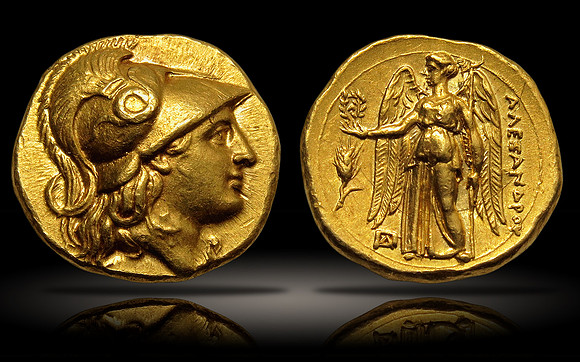
This coin retains an interesting attribute of the engraving process which is rarely seen. The circle surrounding Nike on the reverse is a “guide line”, used to properly align the design elements. Its presence indicates a very early die state, making this one of the first coins struck with unworn dies.
There are also two additional subsidiary lines near the center of the reverse which aided further precision. It’s not known why the guide lines were not removed after finishing the die but these circular artifacts give significant insight into the production of coin dies. They allowed the engraver to ensure that they aesthetically and accurately fit the design on the coin. As shown on this coin, Nike and all of her attributes perfectly fit within the circle, slightly touching its perimeter.
Five other coins from this same reverse die are known, with this example of a substantially higher grade than the others. The presence of more than one example indicates that the die wasn’t revised after striking began, leading the retention of the guide lines as possibly intentional.
KINGS of MACEDON. Philip III Arrhidaios. 323-317 BC. AV Stater (18mm, 8.62 g, 12h). In the name and types of Alexander III. Abydos mint. Helmeted head of Athena right / Nike standing left, holding wreath and stylis; grain ear in left field, monogram below left wing. Price 1519. Perfectly centered, lovely style. Nearly uncirculated.